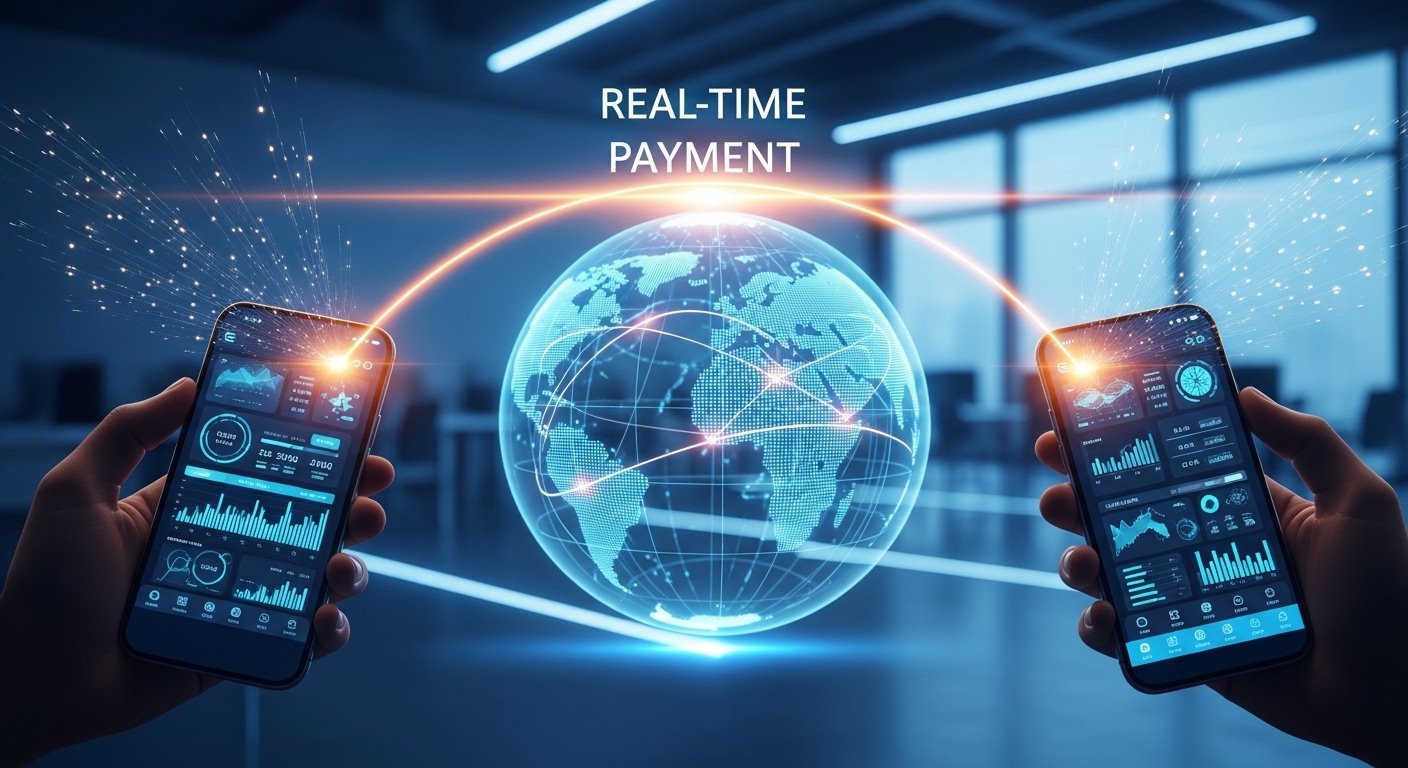
The global financial system is undergoing one of its most significant transformations in decades. Traditional payment systems — once built around delays, processing windows, and intermediaries — are being replaced by real-time payment networks that move money instantly.
From consumer transfers to corporate transactions, real-time payments are reshaping how money flows through the global economy. Financial institutions, businesses, and governments are rapidly adopting instant payment infrastructure to meet growing expectations for speed, convenience, and efficiency.
In today’s digital world, waiting days for money to arrive is quickly becoming a thing of the past.
What Are Real-Time Payments?
Real-time payments are financial transactions that are processed and settled instantly, typically within seconds. Unlike traditional bank transfers that operate within business hours and require clearing periods, real-time systems operate 24 hours a day, 7 days a week.
Funds are transferred, verified, and made available to the recipient immediately — with no delays, no batch processing, and no waiting for settlement cycles.
Traditional payment networks such as SWIFT were designed decades ago when instant digital connectivity did not exist. While still widely used, these systems often involve multiple intermediaries and processing stages that slow down transactions.
Real-time payments eliminate many of these inefficiencies by using modern digital infrastructure.
Why Instant Payments Are Becoming Essential
Consumer expectations have changed dramatically in the digital age. People expect immediate access to services — from streaming content to online shopping. Financial transactions are no exception.
Instant payment systems provide several major advantages:
-
Immediate access to funds
-
24/7 transaction availability
-
Reduced reliance on cash
-
Faster business operations
-
Improved financial transparency
For individuals, this means sending money to family or paying bills instantly. For businesses, it means faster cash flow and more efficient financial management.
Speed is no longer a luxury — it is becoming a requirement.
The Global Expansion of Real-Time Payment Infrastructure
Countries around the world are investing heavily in instant payment systems. Governments and central banks recognize that faster payment infrastructure supports economic growth, financial inclusion, and digital innovation.
Institutions such as the Federal Reserve and the European Central Bank are leading major initiatives to modernize payment networks and enable instant settlements.
Similarly, emerging economies are embracing real-time systems to expand financial access. The Reserve Bank of India has developed one of the world’s most advanced instant payment ecosystems, supporting billions of transactions annually.
This global expansion signals a fundamental shift toward faster financial infrastructure worldwide.
https://play2.11winners.pro/the-rise-of-real-time-payments-how-instant-/
How Real-Time Payments Benefit Businesses
For businesses, delayed payments can disrupt operations, create cash flow uncertainty, and slow supply chains. Real-time payments solve these problems by enabling immediate settlement between buyers and sellers.
Key business benefits include:
Improved cash flow
Companies receive funds instantly rather than waiting days.
Reduced operational risk
Immediate settlement reduces payment uncertainty.
Faster payroll and vendor payments
Businesses can pay employees and suppliers instantly.
Better financial visibility
Real-time transaction tracking improves planning and forecasting.
Industries such as e-commerce, logistics, and gig work rely heavily on instant payments to operate efficiently in fast-moving markets.

Impact on Banks and Financial Institutions
Real-time payments are transforming traditional banking models. Banks must now operate continuously rather than within fixed business hours.
This shift requires major upgrades in technology, security, and infrastructure. Financial institutions are investing heavily in digital platforms capable of processing transactions instantly and reliably.
Payment giants like Visa Inc. and Mastercard Incorporated are also expanding real-time capabilities to remain competitive in an evolving financial ecosystem.
The competitive landscape is changing rapidly, with fintech companies pushing banks to innovate faster than ever before.
Driving the Shift Toward Cashless Economies
Real-time payments play a central role in the transition toward digital and cashless economies. As instant transfers become widely available, reliance on physical cash continues to decline.
Digital wallets, mobile banking apps, and online payment platforms all depend on fast transaction processing. Instant payment infrastructure supports these technologies by enabling seamless money movement.
Governments also benefit from reduced cash handling costs and improved transaction transparency, which can enhance tax collection and financial oversight.
Enhancing Financial Inclusion
One of the most powerful impacts of real-time payments is increased financial inclusion. In many regions, traditional banking services are limited or expensive.
Instant digital payment systems allow individuals to send and receive money quickly using mobile devices. This provides access to financial services without requiring complex banking infrastructure.
By lowering transaction costs and improving accessibility, real-time payments help bring more people into the formal financial system.
Security and Risk Management Challenges
Despite their advantages, real-time payments introduce new challenges.
Because transactions are processed instantly, there is less time to detect and prevent fraud before funds are transferred. Financial institutions must implement advanced security systems, real-time monitoring, and strong authentication measures.
Cybersecurity, transaction verification, and regulatory compliance are critical components of safe instant payment systems.
Balancing speed with security remains one of the biggest priorities for financial regulators and technology providers.
The Future of Instant Money Movement
Experts predict that real-time payments will soon become the global standard for financial transactions. As infrastructure expands and technology advances, instant settlement will be expected across all types of payments — from consumer transfers to international trade.
Future developments may include:
-
Cross-border real-time payment networks
-
Integration with digital currencies
-
AI-powered fraud detection
-
Smart contract-based automated payments
The financial system is moving toward a world where money flows continuously, instantly, and seamlessly.
Conclusion
Real-time payments are revolutionizing how money moves through the global economy. By eliminating delays, reducing costs, and improving accessibility, instant payment systems are transforming banking for individuals, businesses, and governments alike.
While challenges related to security and infrastructure remain, the momentum behind real-time payments is undeniable.
The future of finance is not just digital — it is instant.