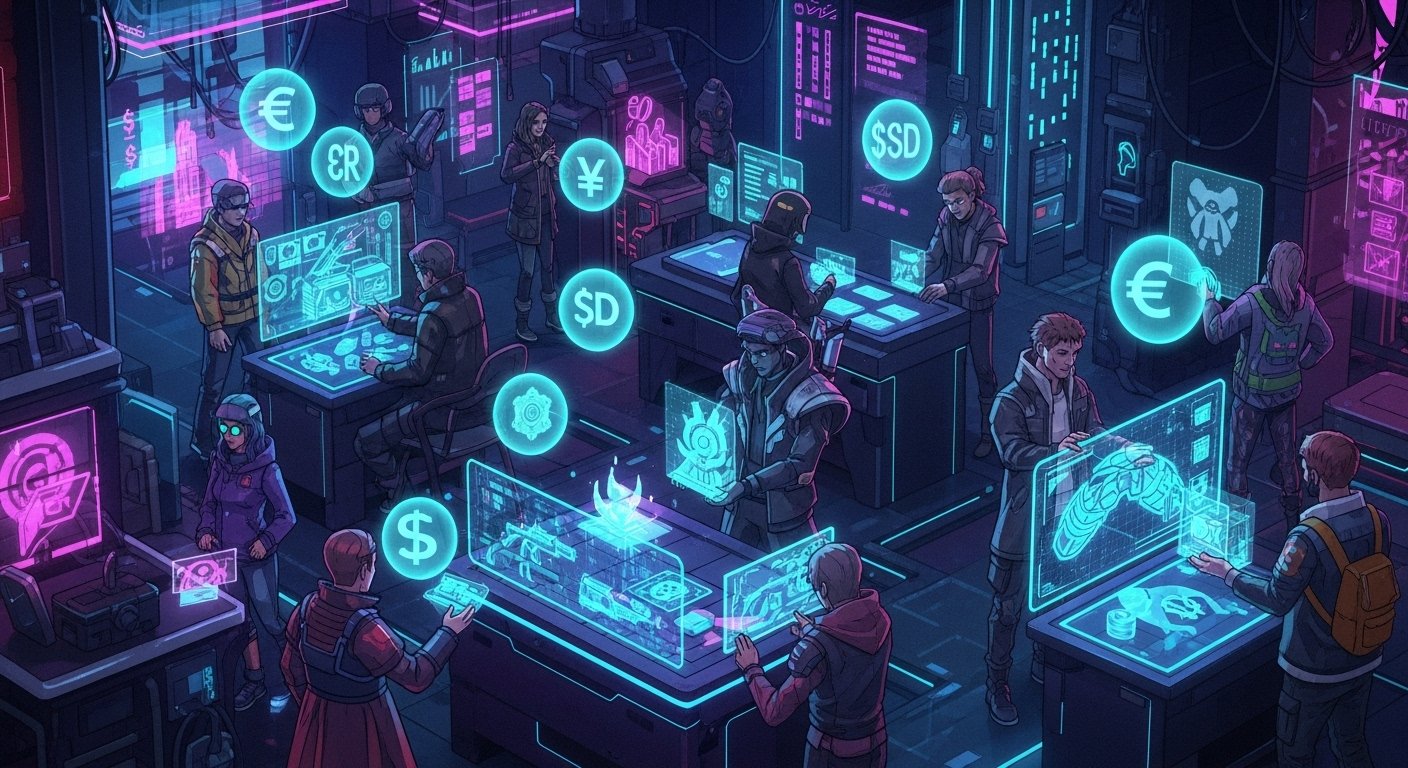
Modern video games are no longer just entertainment. Behind colorful worlds and digital adventures exists a thriving hidden economy worth billions of dollars. In 2026, gaming has evolved into a space where players are not only spending money — they’re earning real income through virtual items, trading systems, content creation, and player-driven markets.
For many, gaming is no longer a hobby. It’s becoming a side hustle, a freelance career, and in some cases, a full-time profession. Let’s explore how this hidden economy works and how players are turning digital play into real financial opportunity.
The Rise of Virtual Economies
Most modern online games now include internal economies that mirror real-world markets. Players buy, sell, trade, and invest in digital assets such as skins, weapons, land, characters, and collectibles.
These virtual goods hold real value because:
-
They are scarce
-
They are desirable
-
They enhance status or gameplay
-
They exist in competitive or social ecosystems
Games like sandbox worlds, multiplayer platforms, and creator-driven universes have introduced digital marketplaces where items can be traded for real currency.
What once seemed like imaginary money now behaves like a micro-economy powered by supply and demand.
https://play2.11winners.pro//hidden-gaming-economy-how-players-real-money/
Skins, Cosmetics, and the Digital Fashion Industry
Cosmetic items have created an entirely new form of digital fashion. Rare skins, outfits, and accessories often sell for hundreds — sometimes thousands — of dollars.
Why?
Because players treat their avatars as identity extensions. Digital appearance carries social status inside games just like fashion does in the real world.
Limited-edition skins act like collectibles. When supply is restricted, resale value rises. Some players specialize in trading rare cosmetics the way others trade sneakers, watches, or art.
This has created a secondary market where smart traders study trends, predict demand, and flip digital assets for profit.
User-Generated Content as a Revenue Stream
Many modern games allow players to create their own content: maps, clothing, mods, mini-games, and virtual spaces. Platforms now reward creators with revenue shares.
This means players can earn by:
-
Designing in-game items
-
Building custom environments
-
Selling downloadable content
-
Creating mini-games inside platforms
-
Publishing digital experiences
Some creators earn more than traditional app developers because they build inside already-popular ecosystems with built-in audiences.
The barrier to entry is low. A teenager with creativity and design skills can monetize talent without needing a company or investors.
Streaming, Spectatorship, and Gaming Entertainment
The hidden economy isn’t only inside the game — it extends into the creator ecosystem.
Players make money by:
-
Live streaming gameplay
-
Uploading tutorials
-
Reviewing games
-
Entertaining audiences
-
Teaching advanced strategies
Gaming has become a spectator sport. Viewers donate, subscribe, and support creators who entertain them.
This transforms skilled or charismatic players into digital performers. Income comes from ads, sponsorships, memberships, and brand deals.
The line between gamer and entertainer is disappearing.
The Marketplace of Digital Labor
Some players earn money through in-game services. This includes:
-
Coaching new players
-
Boosting ranks
-
Farming rare items
-
Completing difficult missions
-
Selling trained characters
This is digital labor — time exchanged for value.
Just as freelancers sell skills online, gamers sell expertise inside virtual worlds. For players in developing economies, these opportunities can represent meaningful income.
Entire communities now exist around virtual work, proving gaming economies are no longer trivial or niche.
Blockchain, Ownership, and Asset Portability
A major shift in the hidden gaming economy is the concept of ownership. New technologies allow players to truly own digital assets instead of renting them from publishers.
This enables:
-
Cross-game asset transfer
-
Player-controlled marketplaces
-
Transparent rarity systems
-
Secure digital ownership
When assets become transferable property, they behave more like investments. Some players treat rare items as long-term holdings rather than temporary purchases.
While still evolving, ownership technology signals a future where virtual economies may rival real ones in scale and legitimacy.
Risks Inside the Gaming Economy
Despite opportunity, the hidden economy carries risks.
Players face:
-
Market volatility
-
Scams and fraud
-
Account theft
-
Exploitative monetization systems
-
Addiction to profit chasing
Some players treat gaming markets like gambling, chasing rare drops or risky investments.
Healthy participation requires understanding boundaries. The gaming economy should enhance life — not replace financial stability or mental well-being.
Regulation and consumer education are becoming important as these systems grow.
Why This Economy Is Growing So Fast
Three major forces are driving expansion:
1. Digital Identity Matters More
People spend more time online, making virtual presence socially important.
2. Younger Generations Value Digital Assets
Gen Z and Gen Alpha see digital ownership as natural, not abstract.
3. Games Are Becoming Social Platforms
They are no longer isolated products — they are interactive economies.
As long as games remain social spaces, markets will form inside them.
Where humans gather, trade follows.
The Future of Earning Through Games
Experts predict gaming economies will continue merging with mainstream finance. We may see:
-
Professional in-game careers
-
Recognized digital property rights
-
Gaming income tax frameworks
-
Virtual entrepreneurship education
-
Cross-platform asset ecosystems
Gaming is evolving into a hybrid space where entertainment, work, and economy intersect.
The hidden economy will become less hidden.
It will simply be called… the economy.
Final Thoughts
The idea that games are “just for fun” is outdated. Modern gaming contains layered systems of value exchange, labor, creativity, and entrepreneurship.
Players are no longer passive consumers. They are:
Creators.
Traders.
Performers.
Workers.
Investors.
https://www.investopedia.com/terms/v/virtual-economy.asp
The hidden economy inside games shows how digital worlds are reshaping how humans understand money, ownership, and opportunity.
For the next generation, earning inside a game may feel just as normal as earning inside an office.
And we’re only at the beginning.