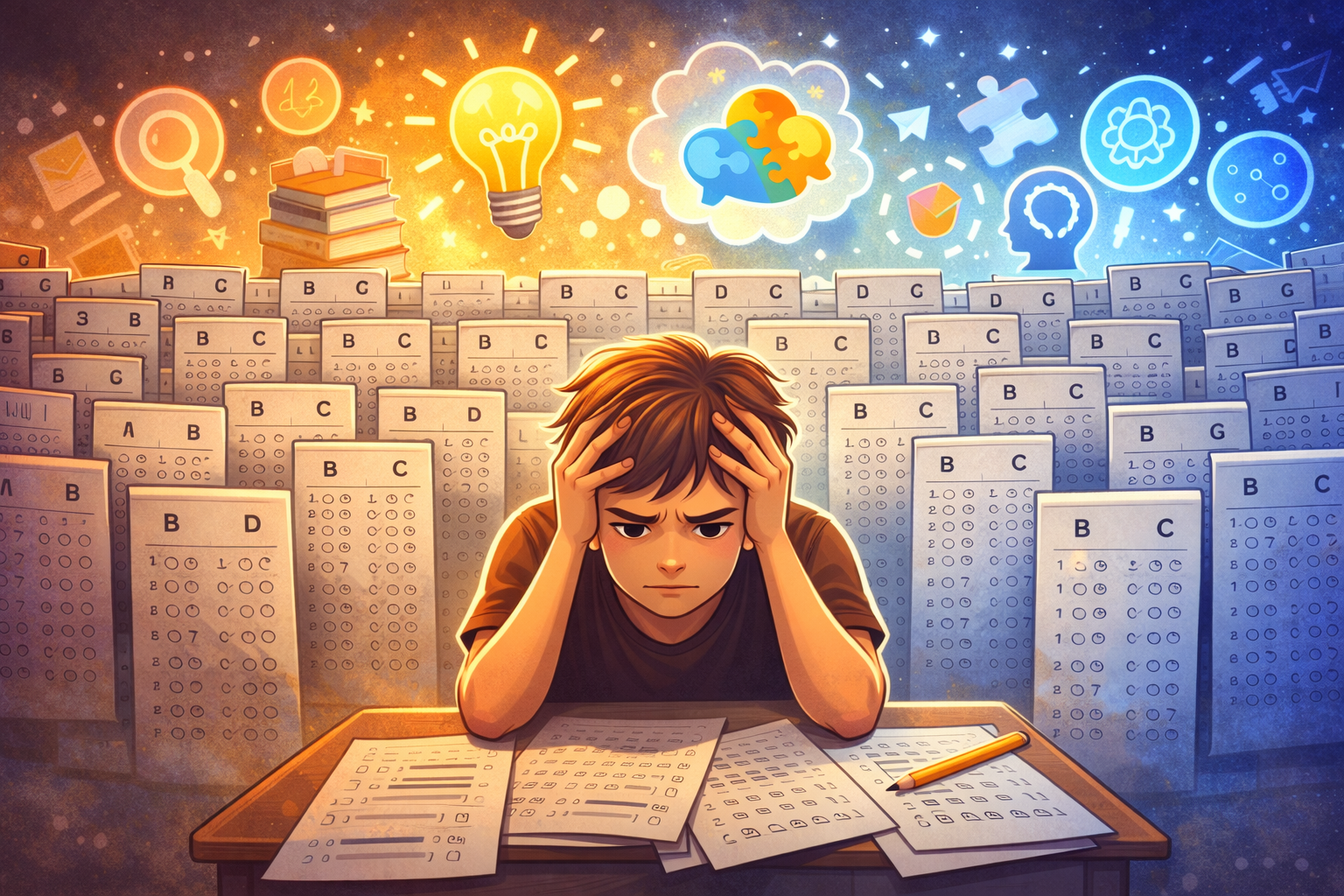
For decades, traditional exams have been treated as the ultimate measure of intelligence. High scores mean you’re “smart,” low scores mean you need to try harder — or worse, that you’re not capable enough.
But here’s the uncomfortable truth:
Traditional exams are failing many of the smartest students.
Across the world, highly creative, analytical, and curious students are struggling in exam-based systems — not because they lack intelligence, but because exams often measure the wrong things.
This article explores why traditional exams fail smart students, how this system damages learning, and what better alternatives look like.
📚 What Traditional Exams Actually Measure
Most traditional exams focus on:
-
memorization
-
speed
-
repetition
-
short-term recall
-
following fixed patterns
These skills are easy to test — but they are not the same as intelligence.
Smart students often excel at:
-
deep thinking
-
asking questions
-
connecting ideas
-
creative problem-solving
-
long-term understanding
Unfortunately, exams rarely reward these abilities.
https://play2.11winners.pro/why-traditional-exams-failing-smart-students/
🎯 Smart Students Think Differently
Highly intelligent students often:
-
overthink questions
-
look for deeper meaning
-
question unclear instructions
-
explore multiple solutions
Traditional exams punish this behavior.
When a student gives a creative or unconventional answer, it is often marked wrong — not because it lacks logic, but because it doesn’t match the “expected answer.”
Over time, smart students learn a dangerous lesson:
“Thinking differently is risky.”
⏱️ Time Pressure Hurts Deep Thinkers
Most exams are time-based. Speed matters as much as accuracy.
But deep thinkers don’t rush.
They analyze.
They reflect.
They consider alternatives.
Time pressure forces them to choose speed over quality — something they’re naturally not wired for. As a result, many smart students underperform in exams despite strong understanding.
🧠 Memorization vs Understanding
Traditional exams reward students who:
-
memorize definitions
-
remember formulas
-
reproduce textbook language
Smart students prefer understanding over memorization.
They want to know why, not just what.
But exams don’t test curiosity or reasoning — they test recall. This creates frustration and boredom among intelligent learners.
https://www.apa.org/topics/test-anxiety
💔 Emotional Damage Caused by Exam Culture
When smart students repeatedly score lower than expected, they begin to doubt themselves.
Common effects include:
-
anxiety
-
loss of confidence
-
fear of failure
-
burnout
-
loss of motivation
Some of the brightest students quietly disengage from learning — not because they aren’t capable, but because the system makes them feel invisible.
🧩 One-Size-Fits-All Testing Is the Core Problem
Traditional exams assume:
-
everyone learns the same way
-
everyone thinks the same way
-
everyone performs best under pressure
This assumption is false.
Intelligence is diverse:
-
analytical
-
creative
-
emotional
-
practical
-
strategic
A single exam cannot measure all of this.
🌍 Real Life Doesn’t Work Like Exams
In real life:
-
you can research
-
you can collaborate
-
you can take time
-
you can try again
-
mistakes are part of learning
But exams:
-
ban resources
-
isolate students
-
punish mistakes
-
allow no second chances
This disconnect makes exams poor predictors of real-world success.
🚀 Smarter Alternatives to Traditional Exams
Education systems are slowly exploring better assessment methods:
✅ Project-Based Learning
Students demonstrate understanding through real-world projects.
✅ Open-Book Assessments
Testing reasoning, not memory.
✅ Continuous Assessment
Evaluating progress over time instead of one-day performance.
✅ Presentations & Portfolios
Allowing students to explain thinking and creativity.
🎓 What Happens When Exams Change?
When assessment becomes flexible:
-
smart students thrive
-
creativity increases
-
anxiety decreases
-
learning becomes meaningful
Countries and schools experimenting with reduced exam pressure often see higher engagement and better long-term outcomes.
🔮 The Future of Assessment
The future of education will likely move toward:
-
skill-based evaluation
-
personalized assessment
-
AI-assisted feedback
-
fewer high-stakes exams
Exams won’t disappear overnight — but their dominance will.
🌟 Final Thoughts
Traditional exams don’t measure intelligence — they measure compliance, memory, and speed.
Smart students deserve better.
If education systems want innovation, creativity, and problem-solvers, they must stop forcing all minds into the same testing box.
Failing exams is not failing intelligence.
Sometimes, it’s the system that fails the student.