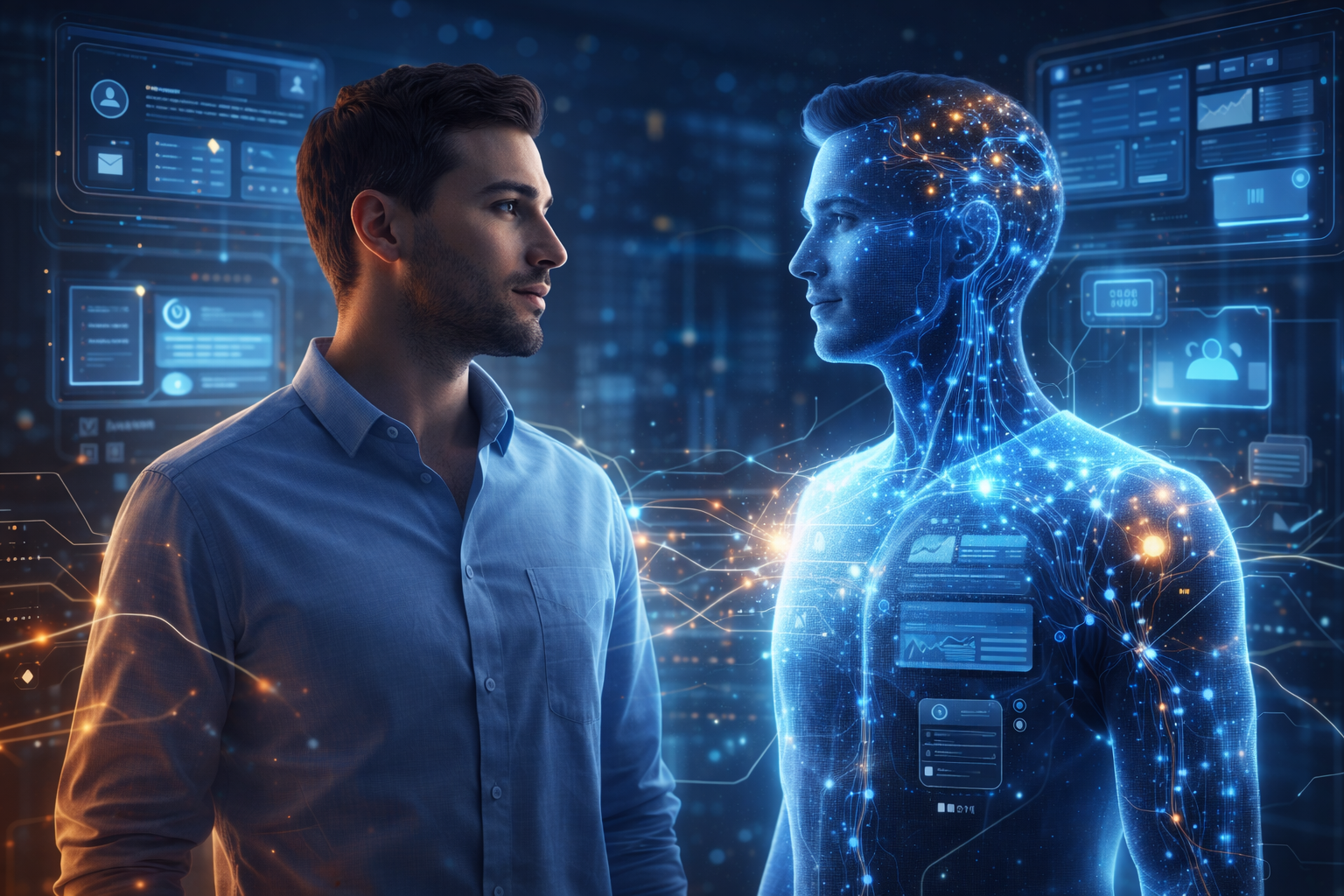
Artificial intelligence is rapidly evolving from simple automation tools into deeply personalized digital companions. One of the most fascinating innovations emerging from this transformation is the concept of AI digital clones — intelligent virtual versions of people that can think, communicate, and even make decisions on their behalf. These personal AI avatars are designed to learn from behavior, preferences, communication style, and real-world data to replicate how a person would respond in different situations.
While the idea may sound futuristic, digital clone technology is already being explored by major tech companies and research labs. What once seemed like science fiction is quickly becoming a practical reality that could redefine how humans work, communicate, and live.
What Are AI Digital Clones?
AI digital clones are advanced virtual representations of individuals powered by machine learning, behavioral data, and predictive algorithms. Unlike traditional virtual assistants that simply follow commands, these clones are designed to learn how you think, predict your choices, and act independently within defined limits.
They are built using data collected from emails, messages, voice patterns, work habits, and decision-making history. Over time, the system models personality traits, preferences, and behavioral patterns. The result is a digital entity capable of representing you in conversations, handling tasks, and even making decisions that align with your usual behavior.
Researchers and developers working in advanced AI modeling — including organizations like OpenAI and Google DeepMind — are exploring systems that simulate human reasoning and communication more realistically than ever before. This progress is laying the foundation for truly personalized AI counterparts.
How Personal AI Avatars Will Communicate for You
One of the most immediate uses of digital clones will be communication management. Imagine an AI version of yourself replying to emails, scheduling meetings, responding to messages, or even attending virtual discussions on your behalf.
These clones would not send generic automated responses. Instead, they would communicate in your tone, reflect your opinions, and respond in ways that mirror how you normally interact with others. This could transform professional productivity by reducing time spent on routine communication.
In global workplaces where collaboration happens across time zones, your AI clone could attend meetings while you sleep, summarize discussions, and make decisions based on your priorities. Rather than replacing you, it acts as an extension of your presence.
Companies focused on digital identity and virtual interaction, such as Meta, are already investing in technology that blends avatars, communication tools, and behavioral AI into unified digital personas.
https://play2.11winners.pro/7-powerful-ways-ai-digital-clones-will/
Decision-Making Powered by Predictive Intelligence
Perhaps the most revolutionary aspect of AI digital clones is their ability to make decisions. By analyzing past behavior and contextual information, these systems can predict how you would respond to different situations.
For example, your AI clone might:
-
Approve routine business requests
-
Manage financial transactions within limits
-
Select preferred travel options
-
Prioritize tasks based on your work style
This predictive decision-making is powered by advanced modeling techniques that simulate human judgment. The more data the clone receives, the more accurate its predictions become.
This could dramatically reduce decision fatigue — a common psychological burden caused by making too many daily choices. With a trusted digital proxy handling routine decisions, humans could focus on creativity, strategy, and meaningful interactions.
AI Clones as Productivity Multipliers
AI digital clones could become the ultimate productivity tool. Instead of simply organizing tasks, they could actively complete them. Think of having a digital partner that works continuously without fatigue.
In professional settings, this might include:
-
Drafting reports based on your writing style
-
Conducting research aligned with your interests
-
Negotiating routine agreements
-
Managing workflows across teams
Major technology ecosystems are already building infrastructure that supports intelligent automation and personalized digital assistants. Platforms developed by Microsoft, for example, are integrating AI deeply into workplace productivity environments — a key step toward fully autonomous digital representatives.
As these systems evolve, individuals could effectively multiply their output without increasing working hours.
Personalized Learning and Self-Improvement
AI digital clones will not only work for you — they will help you grow. Because they continuously analyze your habits and performance, they can identify patterns you might never notice yourself.
Your digital clone could recommend:
-
Skill development paths
-
Productivity improvements
-
Health and wellness adjustments
-
Behavioral changes for better decision-making
In essence, your clone becomes both assistant and advisor — a constantly learning mirror of your own potential. By comparing predicted outcomes with real results, it could help refine strategies and optimize personal performance over time.
This creates a powerful feedback loop where humans and AI evolve together.
Digital Identity and Virtual Presence
As remote work, virtual environments, and online communities expand, digital presence is becoming just as important as physical presence. AI clones could represent individuals across virtual platforms simultaneously.
Instead of managing multiple online identities manually, your AI avatar could maintain consistent representation everywhere — professional networks, virtual meetings, customer interactions, and immersive digital environments.
This persistent virtual presence may become especially important in future digital ecosystems where interaction happens continuously, not just during scheduled sessions.
Ethical Questions and Privacy Concerns
Despite the exciting potential, AI digital clones raise serious ethical challenges. A system that learns everything about a person — behavior, preferences, decisions — also holds deeply sensitive information.
Key concerns include:
-
Data privacy and ownership
-
Identity misuse or impersonation
-
Decision accountability
-
Psychological dependence on AI representation
Who controls your digital clone? Can it act independently beyond your intent? What happens if it makes a mistake that affects others?
As technology advances, governments, developers, and society will need clear frameworks to regulate digital identity rights and AI autonomy. Without responsible design and regulation, the risks could be significant.
The Future of Human–AI Partnership
AI digital clones are not just tools — they represent a shift toward human–AI collaboration at a deeply personal level. Instead of interacting with technology as external devices, people may soon interact with intelligent extensions of themselves.
This transformation could redefine:
-
Work structures
-
Personal productivity
-
Social interaction
-
Decision-making processes
-
Human identity in digital spaces
By 2035, having a personal AI avatar may become as common as owning a smartphone today. The relationship between humans and technology will move from usage to partnership.
Conclusion: A New Era of Digital Selfhood
AI digital clones represent one of the most profound technological shifts of the 21st century. They promise to extend human capability, enhance productivity, and create persistent digital identities that operate alongside us.
However, this innovation also challenges fundamental ideas about autonomy, privacy, and personal identity. As digital clones become more sophisticated, society will need to carefully balance convenience with responsibility.
The future is not just about smarter machines — it is about smarter versions of ourselves. And in that future, your digital clone may become your most powerful collaborator.